
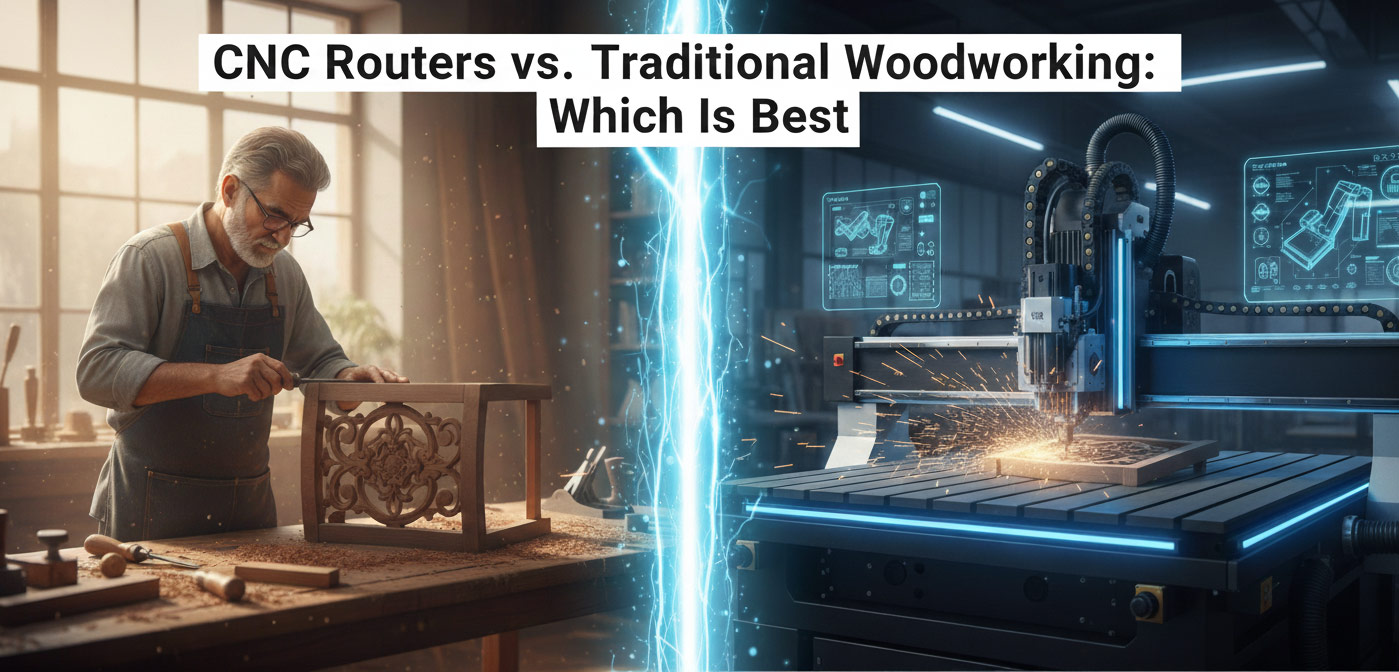
Welcome to the Kataria Tech Zone blog! For centuries, woodworking has been synonymous with skilled hands, sharp tools, and the painstaking precision of a dedicated craftsperson. From carving intricate details to shaping robust furniture, traditional methods have built our world. But in the modern era, a new champion has emerged: the CNC (Computer Numerical Control) router.
So, which approach reigns supreme for your woodworking business? Is it the time-honored techniques passed down through generations, or the cutting-edge automation of a CNC machine? Let’s dive into a head-to-head comparison to help you decide which is “best” for your specific needs.
Traditional Woodworking: The Art of the Hand
Traditional woodworking relies on manual tools and the expertise of a craftsman. This includes everything from hand planes, chisels, saws, and routers to more advanced power tools like table saws, jointers, and planers, all operated directly by a human.
Pros of Traditional Woodworking:
- Artistic Flair & Customization: Unparalleled freedom for unique, one-off artistic creations. The human touch allows for immediate adjustments and an organic feel.
- Lower Initial Investment: The basic hand tools and even standard power tools are generally much less expensive than a CNC router.
- Sensory Experience: Many woodworkers cherish the tactile experience, the smell of sawdust, and the satisfaction of shaping wood with their own hands.
- Repairability: Often easier to repair or modify existing pieces with traditional methods.
Cons of Traditional Woodworking:
- Time-Consuming: Intricate details and repetitive tasks take significantly longer to complete.
- Inconsistent Results: Even the most skilled artisan can have slight variations between pieces, especially on repetitive jobs.
- Higher Labor Cost: Requires highly skilled labor, which commands a higher wage, and is slower per unit.
- Material Waste (Potentially): Human error can lead to mistakes that waste expensive material.
- Physical Demands: Can be physically taxing and carries inherent risks of injury.
CNC Routers: The Power of Precision and Automation
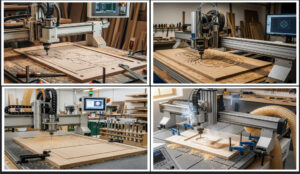
CNC routers are computer-controlled machines that use digital design files to guide cutting tools. They automate the cutting, shaping, drilling, and engraving of wood and other materials with incredible precision.
Pros of CNC Routers:
- Unmatched Precision & Consistency: Produces identical parts every single time, perfect for mass production, assembly-line efficiency, and complex joinery.
- Speed & Efficiency: Drastically reduces production time, allowing for higher output and quicker turnaround on orders. Can often run unattended.
- Complex Geometries: Capable of creating highly intricate 2D and 3D designs that would be impossible or prohibitively difficult by hand.
- Material Optimization: Advanced nesting software minimizes waste by efficiently arranging parts on a sheet, saving significant material costs.
- Reduced Labor Cost Per Unit: Once programmed, a CNC can perform the work of several skilled laborers, freeing them for other tasks.
- Safety: Reduces direct human interaction with cutting tools, enhancing workplace safety.
Cons of CNC Routers:
- High Initial Investment: CNC machines, especially industrial-grade models, require a substantial upfront cost.
- Learning Curve: Requires knowledge of CAD/CAM software and machine operation.
- Maintenance & Technical Support: Requires regular maintenance and can be complex to troubleshoot if issues arise.
- Less “Hand-Touched” Feel: While precise, the output lacks the unique, subtle imperfections that some associate with handmade craft.
- Electricity Consumption: Requires significant power to operate.
The Verdict: Which is “Best”?
The truth is, there’s no single “best” answer. It entirely depends on your business model, goals, and the type of woodworking you do.
- Choose Traditional Woodworking if:
- You focus on unique, high-art pieces, custom bespoke furniture, or intricate restoration work where the human touch is paramount.
- Your production volume is low, and turnaround time is less critical than artistic expression.
- Your budget for initial equipment is limited.
- Choose a CNC Router if:
- You aim for high-volume production, whether it’s cabinets, furniture components, signs, or repeated custom orders.
- Precision, consistency, and efficiency are your top priorities.
- You want to reduce labor costs per unit and maximize material yield.
- You need to produce complex designs that are difficult or impossible by hand.
- You’re ready to invest in technology to scale and modernize your business.
Often, the best solution is a hybrid approach. Many successful woodworking shops integrate CNC technology for repetitive, precise cuts while reserving traditional methods for assembly, finishing, and adding the final, personalized touches that only a human hand can provide.
At Kataria Tech Zone, we believe in empowering woodworkers with the right tools for success. Whether you’re exploring your first CNC router or optimizing an existing setup, we’re here to provide expertise and solutions.



One thought on “CNC Routers vs. Traditional Woodworking: Which Is Best?”